Anne Newland's Indian Health Service years, August 2004 to May 2012, were spent at Kayenta Health Center on the Navajo Nation, where her medical officer post mixed outpatient visits with emergency care. Whether a community counts as rural sounds like a question with an obvious answer, yet the federal government answers it in at least three different ways, and the answer decides who may apply for rural health programs.
Take a single town of 3,000 people that stands well apart from any urban area but lies inside a county the Office of Management and Budget classifies as metropolitan. Under the Census Bureau's rules the town is rural, because it is too small to be an urban area. Under OMB's county system it sits in the metropolitan column, which is not rural, as the page on how HRSA, the federal agency that runs rural health grants, defines rural1 explains. One town, two verdicts.
How the Census Bureau draws the line
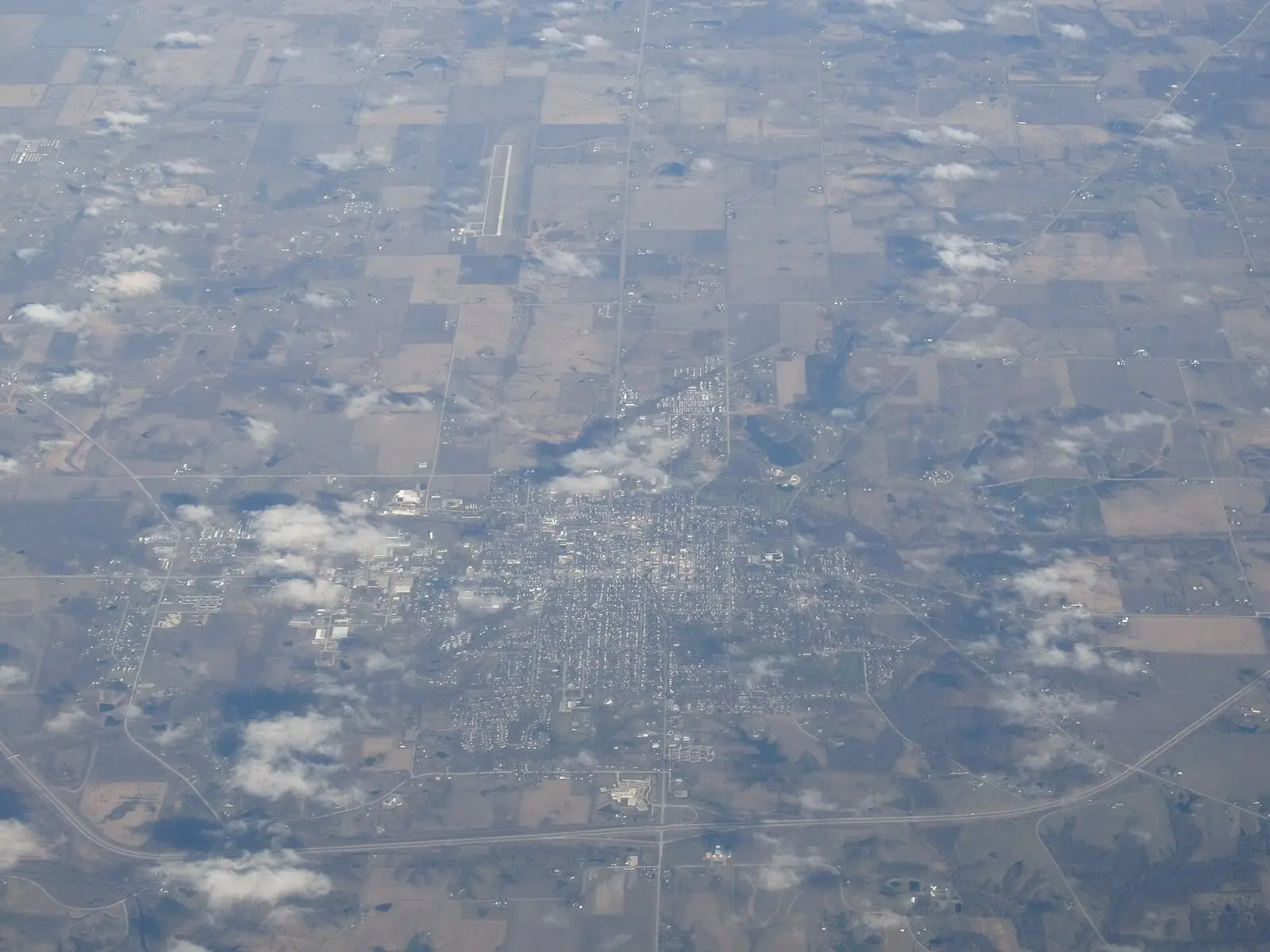
The Census Bureau never defines rural directly. It defines urban areas and then counts every person, house and stretch of land outside them as rural1. An urban area needs at least 5,000 people or 2,000 housing units.
By that measure, the 2020 Census counted 20 percent of the population and 97 percent of the land area of the country as rural, HRSA reports. The bureau redraws urban boundaries each decade after the census, so a growing town can cross the line between one count and the next.
How OMB sorts counties
The Office of Management and Budget does not call anything rural either. It sorts counties into metropolitan, micropolitan or neither, and OMB itself does not describe those categories as rural or urban1. HRSA and its rural health office treat micropolitan counties and those outside both groups as rural, and metropolitan counties as not rural.
After the 2020 Census, nonmetropolitan counties held 46.0 million people and covered 71.6 percent of the land, according to HRSA. OMB updates its county lists from time to time; the current rural health definition uses the delineations OMB issued in a bulletin of July 2023.
Why the two measures disagree
The Census approach finds more rural residents, and the OMB approach finds fewer1. Neither nests inside the other: some places that OMB labels nonmetropolitan are urban to the Census, and some metropolitan counties contain land the Census calls rural.
HRSA names two reasons. Census urban areas do not follow city or county lines, which makes them awkward to use with ordinary boundaries. And whole metropolitan counties can include vast empty land. The agency's own example is the Grand Canyon, which lies in a metropolitan county.
| Census Bureau | OMB counties | Rural health office | |
|---|---|---|---|
| Unit | Urban areas | Whole counties | Counties and census tracts |
| What counts as rural | Anything outside an urban area | Micropolitan and other nonmetro counties | Nonmetro counties plus rural tracts in metro counties |
| People counted rural | 20 percent | 46.0 million in nonmetro counties | 19.3 percent |
| Share of land rural | 97 percent | 71.6 percent | 87.7 percent |
How the rural health office builds its own definition
The Federal Office of Rural Health Policy, part of HRSA, has coordinated rural health work across the federal health department, HHS, for more than 35 years, according to the office's own description2. It defines rural so that organizations can apply for its grants, and it builds the definition from other agencies' data rather than starting from scratch1.
The office begins with OMB's nonmetropolitan counties. It then adds outlying metropolitan counties that contain no part of an urban area of 50,000 or more people, and it reaches inside metropolitan counties to pick out rural census tracts, of which the country has more than 85,000. On 2020 data, the result counts 19.3 percent of Americans and 87.7 percent of the land as rural.
What commuting codes and road ruggedness add
The tract level pieces come from two measures made by the Economic Research Service of the Department of Agriculture: Rural Urban Commuting Area codes and the Road Ruggedness Scale, both updated in 20251. Tracts in metropolitan counties with commuting codes 4 through 10 count as rural.
Commuting codes alone miss large, thinly settled tracts, so HRSA also counts tracts of at least 400 square miles with no more than 35 people per square mile and commuting codes 2 or 3. Terrain gets its own rule. Tracts of at least 20 square miles with codes 2 or 3 and the most rugged road score, 5, also qualify, because travel over steep mountain roads can keep people from care.
How the definition has changed over time
The office has adjusted OMB's county map for decades. Its first major method, the Goldsmith Modification, was used in 1992 to find rural tracts inside metropolitan counties for the Rural Health Outreach Grant Program, and today's definition descends from it1.
- 1992The Goldsmith Modification first marks rural tracts inside metro counties
- 2002The information center now called the Rural Health Information Hub opens
- FY22Outlying metro counties without a large urban area join the definition
- July 2023OMB issues the county delineations now used by the definition
- FY25Tracts with highly rugged roads in metro counties are added
- September 2025New commuting and ruggedness data update eligible areas for FY26 grants
Adding categories enlarges the rural map, but refreshing the underlying data can also remove places. HRSA notes that some areas rural in FY25 changed status in FY26 once new 2020 Census data were applied.
What the definition unlocks
Being rural on HRSA's map is what makes a place eligible for the office's grants. The office funds 50 State Offices of Rural Health and supports small rural hospitals through the Medicare Rural Hospital Flexibility Grant program, according to its overview2. It also analyzes how federal policy affects the 64.5 million residents of rural communities it counts.
HRSA's rural health page4 lists the aims of those grants as stronger health networks, better care delivery and help for opioid use disorder treatment. Its list of community programs5 shows how specific they get: one year of support to plan a formal rural health network, black lung clinics for coal miners, screening for people exposed to radiation from nuclear weapons testing, and maternal care coordination across 252 rural Delta counties and parishes in eight states.
Why measuring rural access has long been hard
Definitions are a tool for counting, and the counting has never been easy. A 1977 RAND overview by Robert L. Kane found that although rural people had less access to care, the ability to measure how much less was underdeveloped, and that programs to add rural health workers had met mixed success6. Kane saw physician assistants and nurse practitioners as a promising source of rural primary care.
Kristine Sande, who directs the Rural Health Information Hub, told the Daily Yonder in a 2023 interview3 that distance to care, workforce and low patient volumes remain persistent rural problems. Her hub, funded by the federal rural health office, exists in part because staff at small rural facilities wear many hats and often lack a dedicated grant writer, which leaves them at a disadvantage against urban hospitals competing for the same funds.
“Any area that is not urban is rural”HRSA, How We Define Rural, Health Resources and Services Administration
Why the line on the map matters
The line matters because programs follow it. A tract that qualifies can seek grants for networks, outreach or maternity care, while a neighbor across the boundary may not, even when the roads and distances look alike. HRSA's addition of road ruggedness recognized that a map can miss isolation, a point echoed by a 2026 RAND study of West Virginia7, which found that mountain terrain and a difficult road network significantly increase travel times to care.
The definitions shape other entries in this cluster: the rural doctor shortage is measured against them, and newer ways of organizing rural care are often paid for through grants that require them. For a clinic, a county or a single town, where the line falls on the map can decide whether help is available at all.
References
- How We Define Rural | HRSA. Health Resources and Services Administration.
- Federal Office of Rural Health Policy | HRSA. Health Resources and Services Administration.
- Q&A: The Rural Health Information Hub for Doctors, Policymakers. The Daily Yonder, 2023.
- Rural Health | HRSA. Health Resources and Services Administration.
- Rural Community Programs | HRSA. Health Resources and Services Administration.
- An Overview of Rural Health Care Research. RAND, 1977.
- Developing a Research Agenda to Improve Rural Health Access and Quality in West Virginia. RAND.
Further reading online
- Health Resources and Services AdministrationHow We Define Rural | HRSA
- The Daily YonderQ&A: The Rural Health Information Hub for Doctors, Policymakers
- RANDAn Overview of Rural Health Care Research
Related entries
The Rural Doctor Shortage
Seventy years of counting doctorless towns, and the reasons young physicians settle elsewhere.
The American Country Doctor
From buggy rounds to the board certified family physician, a century of the small town generalist.
Emergency Care in Remote Places
Volunteer ambulances, scarce emergency physicians and the debate over who should staff a small emergency room.

