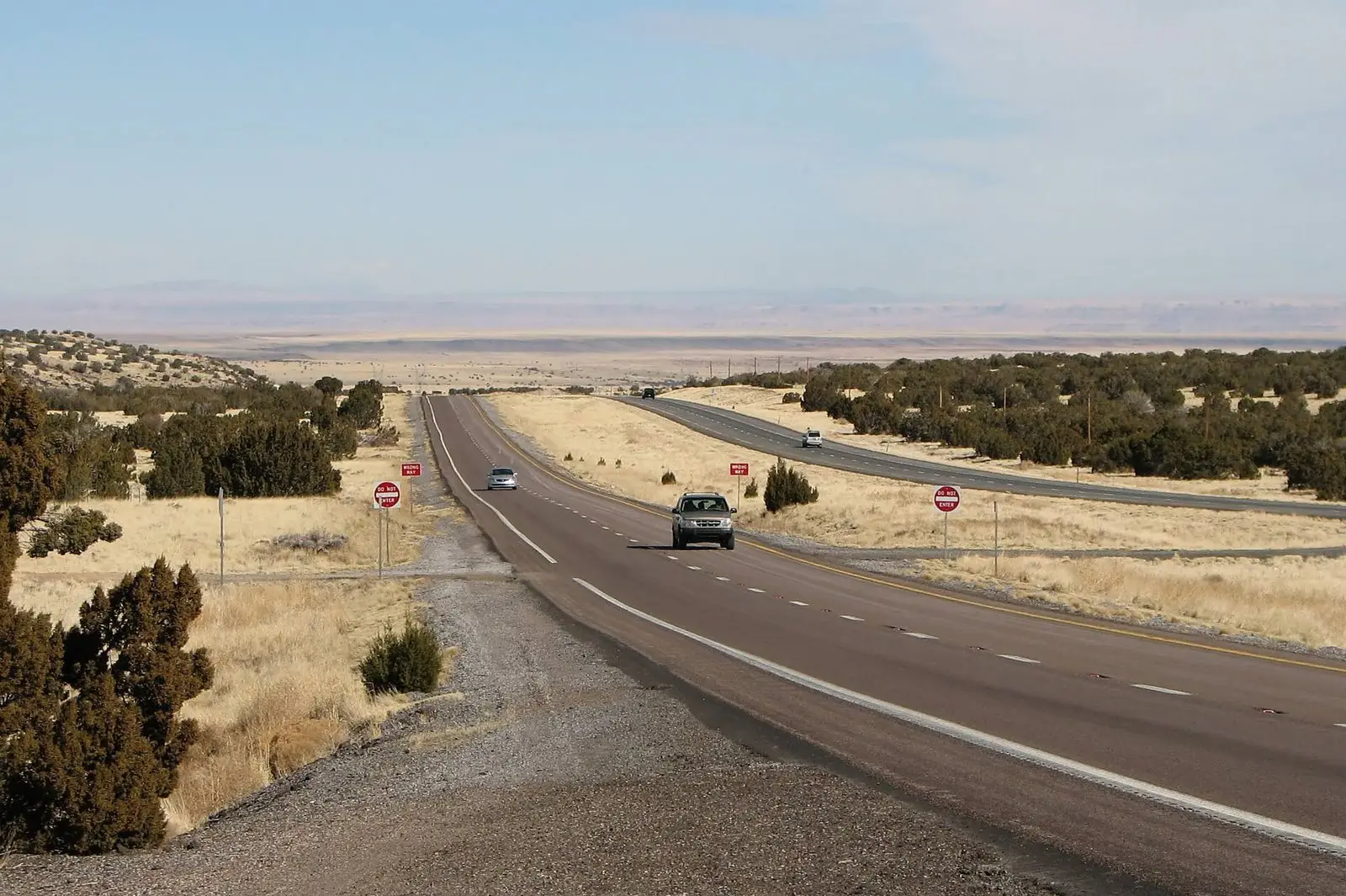
Anne Newland practiced as an Indian Health Service physician at Kayenta Health Center on the Navajo Nation from 2004 to 2012, giving outpatient and emergency care with the closest hospital some 70 miles off. This entry turns from that one clinic to the wider subject such a number belongs to, which is how distance shapes medical care for people across rural America.
Glen Ullin, North Dakota, is a town of roughly 700 people where a third of the residents are 65 or older, and its ambulance is run by volunteers. When a patient needs an IV line or a breathing tube, the crew has no paramedic who can place one, so it drives toward Bismarck and meets a city ambulance on the highway, typically about 17 miles out on the odometer, according to a 2024 NPR report from Glen Ullin1. Those 17 miles are where advanced emergency care begins for that town. Every rural community has a number like it, and the number decides a great deal.
How far rural patients travel
The longest trips often come at the worst moments. In 2018 The New York Times described a Missouri woman whose urgent ride to deliver premature twins covered 100 miles, took nearly four hours and included a stop at a hospital that could no longer offer labor and delivery care2. In the reader comments the Times collected afterward2, a clinician from Ontario recalled riding in an ambulance with a laboring patient on snowy country roads toward the closest obstetric unit.
Distance also governs routine support. The coordinator of an aging in community program in western Morton County told NPR that she keeps in touch with about 150 older adults and hopes to stretch the program to 200 miles, about five times the distance she usually covers1. More than half of her participants, she said, have no family nearby who can help.
Researchers have tried to measure this unevenness for decades. The 1976 RAND report by Sinclair B. Coleman3 studied rural access by relating physician to population ratios to the demographic and other characteristics of counties, and it singled out outlier counties with substantially more or substantially fewer physicians than the pattern predicted.
Specialists sit farther away than clinics
A clinic in town does not mean every kind of care is close. A study described in a 2026 Time report on counties without surgeons4 found that 38 percent of United States counties, home to roughly 15 million people, have no general surgeon, and 30 percent have no surgeon in any of 12 specialties. Even many rural counties with small hospitals had no full time surgeon.
The gap between places is wide. Time reported that Rochester, Minnesota, home of the Mayo Clinic, has 250 surgeons per 100,000 people, while Harlingen, Texas, has 204. Thomas Tsai, a surgeon and coauthor of the study, said rural areas can reach primary care fairly easily through telehealth and advanced practice clinicians, but often cannot reach specialty care such as surgery. He framed the open questions in terms of distance: how far patients are being transferred, and what that burden means for them.
Terrain, roads and broadband stretch the trip
Miles on a map understate the problem where roads bend through mountains. A 2026 RAND Health Quarterly study of West Virginia5 found that the state's mountainous terrain and difficult road network significantly lengthen travel times and make care harder to reach. The same study listed transportation and broadband limits among the state's long standing barriers, alongside shortages of physicians, nurses, laboratory technicians and emergency medical staff.
West Virginia organizes care in a hub and spoke pattern, with academic health networks at the center and rural hospitals, community health centers, school based clinics and telemedicine programs around them5. That design works only as well as patients can reach the spokes. The companion RAND research report6, published in December 2025, groups the state's problems as workforce shortages, chronic disease, infrastructure gaps and access barriers, and proposes research priorities for each.
When the test is somewhere else
Distance reaches into diagnosis, because many tests need equipment and trained people that a small clinic cannot always keep. In Glen Ullin, NPR found, the clinic owns an X ray machine but has no technician to run it, and a mobile CT scanner that once came weekly now visits once a month1. The town's nurse practitioner sees 15 to 20 patients on a typical day with a staff of two, and handles refills and acute infections.
The emergency side shows the same pattern. Nationally, more than half of rural emergency medical services agencies are staffed by volunteers, compared with 14 percent in urban areas, according to NPR's reporting1. The Glen Ullin crew answers 120 to 150 calls a year, most involving older adults, and they are almost always serious calls such as strokes and cardiac arrests.
- 1Pager A volunteer EMT on call around the clock is paged, often while at a day job
- 2Local care The crew gives what the ambulance carries, such as aspirin and asthma or chest pain medicines
- 3Limit reached With no paramedic on the squad, no one can start an IV or place a breathing tube
- 4Call ahead The crew asks the Bismarck ambulance service to meet it on the highway
- 5Handoff The two ambulances meet, typically about 17 miles out of town, and Bismarck takes over
Why doctors are not where patients live
Part of the distance problem is where physicians train and settle. A 2025 analysis by Gaetano Forte for the Association of American Medical Colleges7 noted that New York trains more physicians than any other state, yet slightly more than half of those finishing training each year leave to practice elsewhere. Of physicians practicing nationwide in 2022, 17 percent had trained in New York, but only 9 percent of rural physicians had.
Forte argued that recruiting clinicians to rural areas has increased without closing rural health gaps, and that recruitment alone is not enough. That echoes a much older finding. Coleman's 1976 RAND analysis weighed rural preceptorships, loan forgiveness, area health education centers, rural group practices and programs that steer specialty choice as ways to change where doctors practice3. The long history behind those efforts is told in the entries on why rural America lacks doctors and on the general practitioner of small towns.
| Stage | What the sources describe | |
|---|---|---|
| Reaching care | Mountain roads lengthen travel in West Virginia; a Missouri birth meant a 100 mile ride | |
| Diagnosis | A Glen Ullin clinic has an X ray machine but no technician to run it | |
| Specialist care | 38 percent of counties have no general surgeon | |
| Emergencies | A volunteer crew meets a city ambulance about 17 miles out of town | |
| Follow up | Patients who cannot be seen locally must drive or find a driver |
How distance reshapes every appointment
How agencies decide which places count as remote is covered in what counts as rural, and the clinics that try to bring care closer by video or shared staff appear in newer ways of organizing rural care. Both sit within medicine far from the hospital.
Reporting across five states for the PBS NewsHour series Rural Rx8, correspondent William Brangham argued that the larger share of health is decided long before a patient arrives at a clinic, in the ordinary weeks of life around it. In West Virginia, a physician told the team that some of his patients had first seen a doctor in their 60s or 70s.
“they're going to have to drive or find a driver”Rhonda Schmidt, nurse practitioner in Glen Ullin, North Dakota, to NPR, NPR
That is how distance reshapes a visit. When the trip is long, each appointment has to carry more than its share: the test that cannot be done in town, the refill, the referral and the plan for the next step all have to fit into one drive. A missed visit is not simply rescheduled for next week, because the next chance may depend on a ride, the weather and a free day. For rural patients the miles are part of the treatment plan, written in before the first question is asked.
References
- In a rural small town, a group of locals steps up to support senior health. NPR, 2024.
- Doctors and Health Workers Reflect on Rural America’s Limited Access to Care (Published 2018). The New York Times, 2018.
- Physician Distribution and Rural Access to Medical Services. RAND, 1976.
- Millions of Americans Live in a County Without a Surgeon. Time, 2026.
- Developing a Research Agenda to Improve Rural Health Access and Quality in West Virginia. RAND.
- How to Improve Health Care Access and Quality in Rural West Virginia. RAND, 2025.
- Current Approaches to Rural Health Workforce Challenges Need Improvement. Association of American Medical Colleges.
- Exploring the health care challenges rural Americans face across 5 states. PBS, 2023.
Further reading online
- NPRIn a rural small town, a group of locals steps up to support senior health
- The New York TimesDoctors and Health Workers Reflect on Rural America’s Limited Access to Care (Published 2018)
- RANDPhysician Distribution and Rural Access to Medical Services
- TimeMillions of Americans Live in a County Without a Surgeon
- Association of American Medical CollegesCurrent Approaches to Rural Health Workforce Challenges Need Improvement
- PBSExploring the health care challenges rural Americans face across 5 states
Related entries
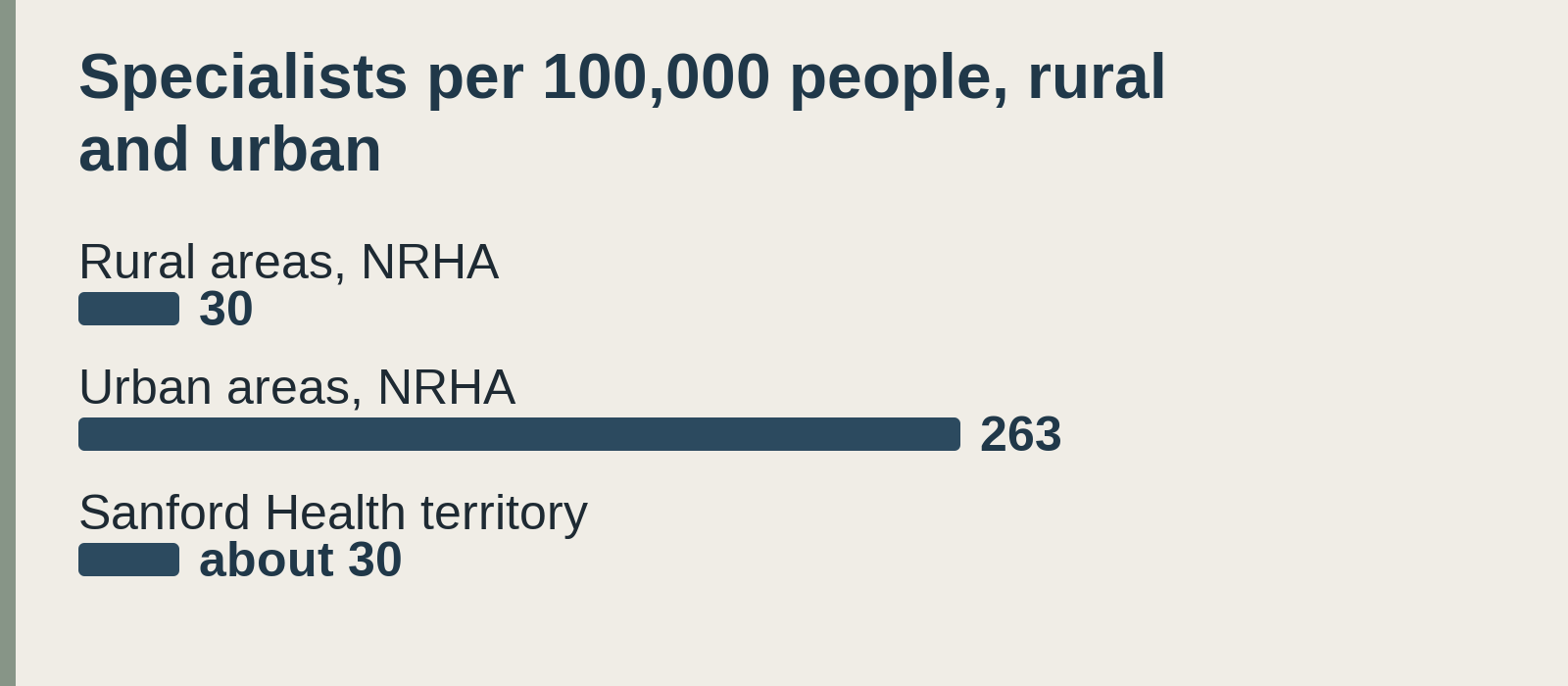
New Models of Rural Care
Video exams, hub hospitals, traveling specialists and returning retirees, and the limits of each.
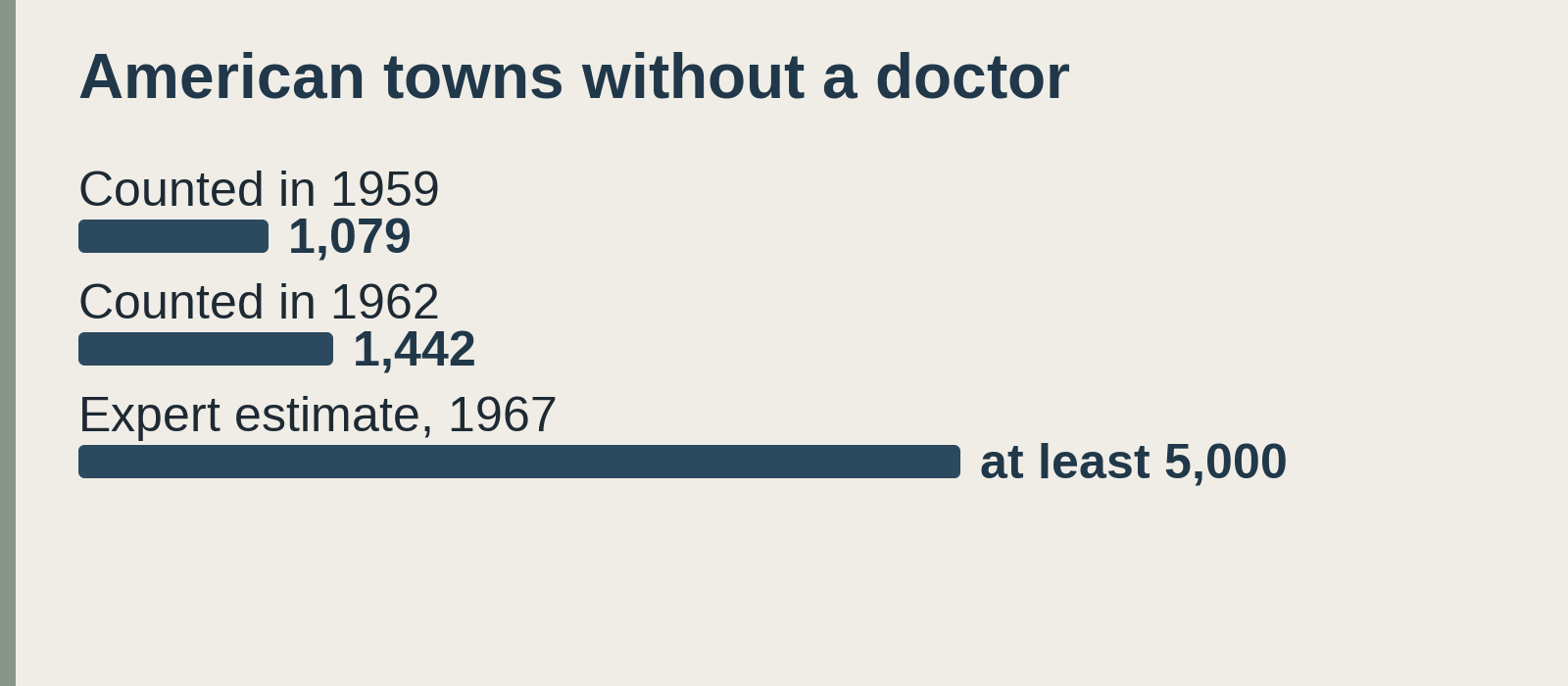
The Rural Doctor Shortage
Seventy years of counting doctorless towns, and the reasons young physicians settle elsewhere.
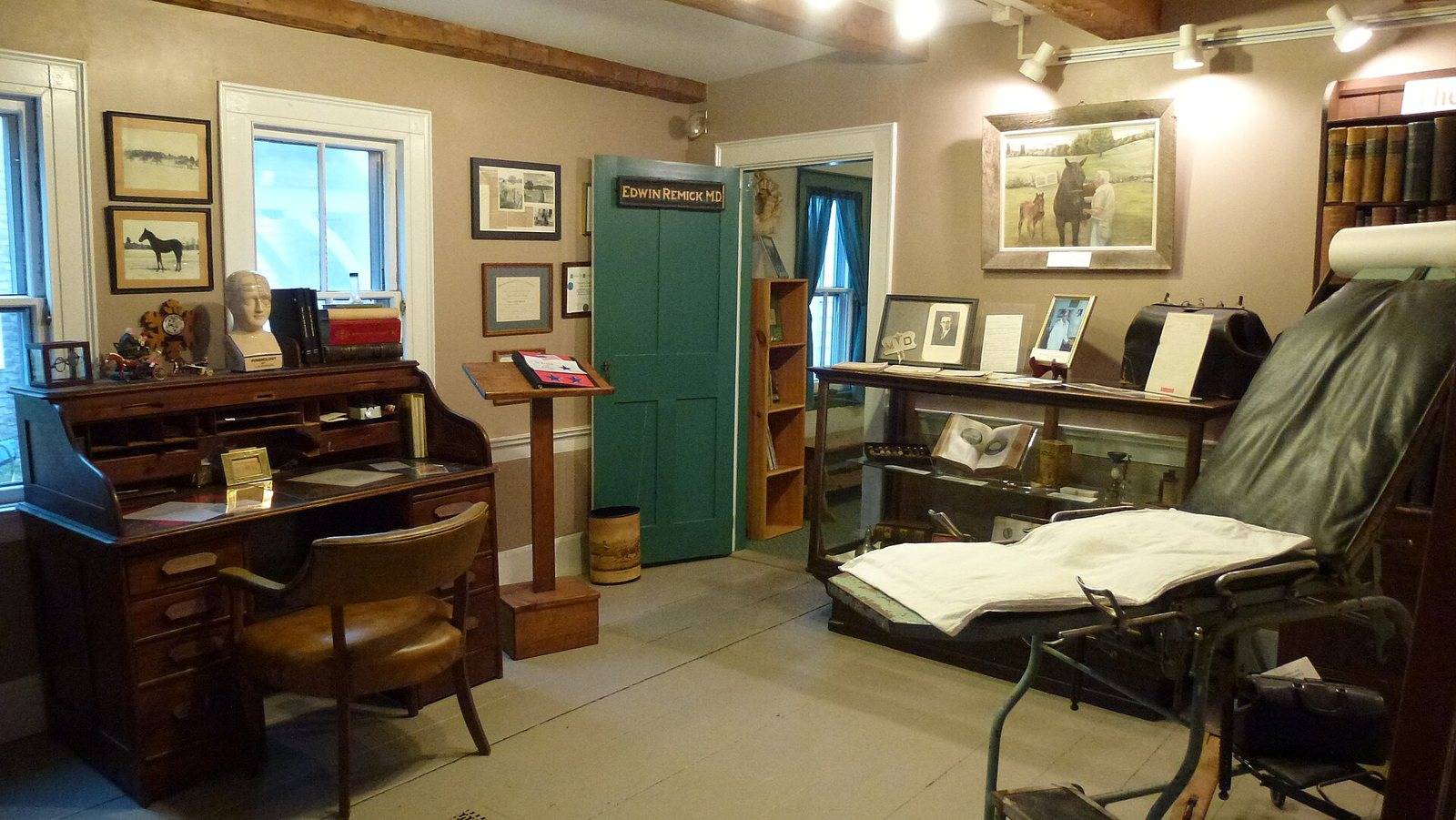
The American Country Doctor
From buggy rounds to the board certified family physician, a century of the small town generalist.

