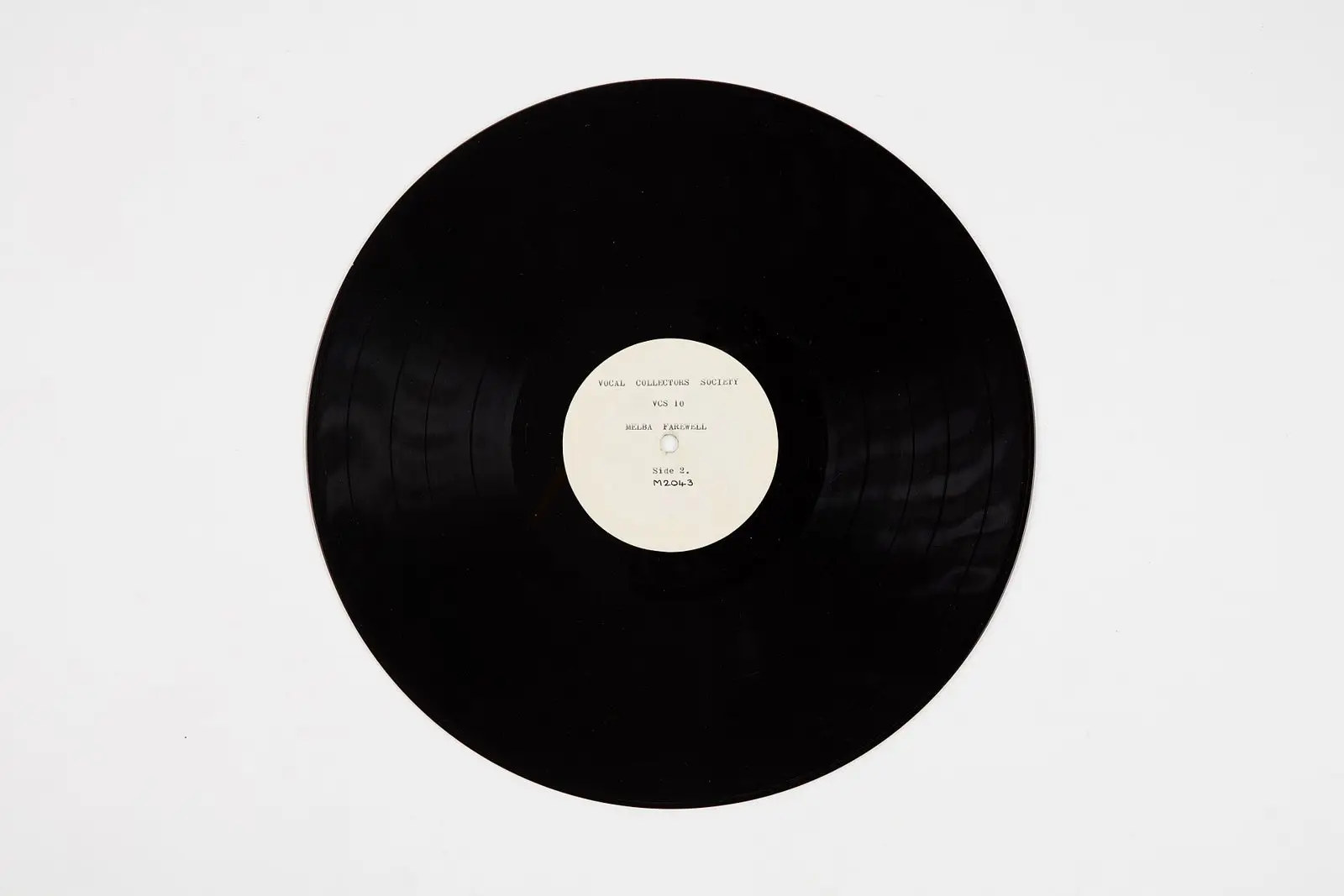
The Caravans were among the gospel groups whose records Anne Newland played between 1987 and 1990 on Amazing Grace, WKCR's Sunday morning program at Columbia University. Formed in Chicago in 1952, the group was the most popular touring act in gospel from the late 1950s to the mid 1960s, AllMusic says, and its shifting roster produced a long run of later stars1.
A group photograph of the Caravans from late 1958 would hold four singers and a pianist. When they made their first new recordings for Savoy's Gospel label that October, the lineup was Albertina Walker, Inez Andrews, Shirley Caesar and Delores Washington, with Eddie Williams singing and playing piano, according to Lee Hildebrand's history of the group for Malaco Records2. Andrews and Caesar would each go on to front groups and solo careers of their own.
Formed in Chicago in 1952
The Caravans grew out of the Gospel Caravan led by the Chicago singer Robert Anderson. Malaco gives 1952 as their starting year, with Walker, Ora Lee Hopkins, Elyse Yancey and Nellie Grace Daniels singing and Edward Robinson at the piano2. AllMusic's biography1 agrees on 1952 and Chicago, while a Cross Rhythms profile of Inez Andrews3 dates the group to 1951, under the name Robert Anderson and His Gospel Caravan. Walker sang contralto and stayed the one constant as the membership turned over around her.
The States label years
The group's first label was States, a Chicago company that issued thirteen Caravans singles before 19582. Members came and went quickly. In 1953 Bessie Griffin, Iris Humble and the pianist Charlotte Nelson replaced three of the originals, and between 1954 and 1956 the roster included Cassietta George, Dorothy Norwood and James Cleveland, among others. Cleveland played piano and also spoke over the hymns, and AllMusic sets his relaxed narration against the intense singing behind him1. By 1956, in that account, the Caravans ranked among the most popular acts in gospel, admired for teamwork so close that each singer seemed to know what the others would do next.
Inez Andrews and Mary Don't You Weep
Inez Andrews was born Inez McConic in Birmingham, Alabama, in 1929, the daughter of a Baptist preacher, and sang in the junior choir of his church3. She had toured with the Carter Choral Ensemble and filled in with Dorothy Love Coates's Original Gospel Harmonettes when Cleveland, then the Caravans' pianist and arranger, persuaded her in 1956 to replace Imogene Greene. Her lead on the old spiritual Mary Don't You Weep, released in 1958 in two parts, is now counted among the most memorable gospel performances of the period. Anthony Heilbut described a voice with a low contralto base, a hoarse middle register and a top that rose clear above it.
Caesar, Andrews and the Savoy hits
Savoy Records of Newark signed the Caravans in 1958 and bought the rights to all of their States recordings, released and unreleased2. Shirley Caesar, a young soprano, had joined by then, and AllMusic calls the pairing of Caesar with Andrews's piercing contralto the core of the group's power at the end of the decade1. Audiences came to watch the two trade phrases. Bil Carpenter wrote that by 1960 Andrews was a household name in gospel, known as the High Priestess3. Caesar's lead on I Won't Be Back, also called Sweeping Through the City, was a hit for the Gospel label in 19622.
Vee Jay and Walk Around Heaven All Day
Andrews left in 1961 to form the Andrewettes3. In late 1962 the Caravans moved to Vee Jay Records in Chicago, where they made the LP Seek Ye the Lord, and AllMusic calls the Vee Jay period their most stable, with Walker, Caesar, George, Washington, Josephine Howard and the pianist James Herndon on every release1. Their big Vee Jay hit, in 1964, was Walk Around Heaven All Day, written and sung by Cassietta George and now a standard2. About three and a half years after leaving, they returned to Savoy's Gospel label, where Caesar led Choose Ye This Day.
| Years | Releases named in the sources | |
|---|---|---|
| States | 1952 to 1958 | Thirteen singles |
| Gospel, a Savoy label | 1958 to 1962 | Mary Don't You Weep; I Won't Be Back |
| Vee Jay | Late 1962 to 1966 | Seek Ye the Lord; Walk Around Heaven All Day |
| Gospel again | 1966 on | Choose Ye This Day |
Touring the gospel highway
The Caravans made their name on the road. Talking to Billboard in 2006, as Cross Rhythms quotes her, Walker recalled that the singers could not stay in white hotels or eat in white restaurants, had to collect food at back doors and drove across the country six to a car3. She said the reunion song Paved the Way was about those trips and the easier travel they opened for younger singers. Heilbut's book The Gospel Sound, as quoted by Malaco, put the group's strength down to familiarity: the singers knew one another well enough to anticipate each other's improvisations2.
“The Caravans were the hippest ladies in gospel.”Anthony Heilbut, The Gospel Sound, as quoted by Malaco Records, Malaco Records
From the Caravans to Aretha Franklin
The group's influence reached soul through Aretha Franklin. Daphne A. Brooks, writing for NPR and drawing on Aaron Cohen's book about Franklin's album Amazing Grace, says the Caravans' 1958 Mary Don't You Weep, with Andrews's bluesy vamp and spoken sermonette about Lazarus, was probably the version that most directly shaped the performance Franklin recorded at New Temple Missionary Baptist Church about nine months after her March 1971 concerts at the Fillmore West4. Brooks also points to a 1959 version by the Swan Silvertones, whose lead Claude Jeter added a line about being a bridge over deep water that stayed with Paul Simon. Franklin's own church grounding can be heard on Songs of Faith, recordings made in 1956 at New Bethel Baptist Church in Detroit when she was 14, which Pitchfork reviewed in 20195. She had been singing in church since age nine and absorbed the soloists who appeared with the Rev. C.L. Franklin on his travels, Clara Ward above all.
Breakup and reunions
Caesar went solo at the end of 1966, and with Andrews and George already gone, the Caravans' fortunes faded2. AllMusic says that within months only Walker was left, and that she formed a new edition including Loleatta Holloway1; Malaco lists Gwen Morgan, Julia Price and Willie James McPhatter among later leads before Walker disbanded the group in the early 1970s2. Reunions followed. Walker, George, Howard and Washington made Share! for Birthright in 1976, and in 2006 Norwood organized Paved the Way for Malaco, recorded at West Point Baptist Church in Chicago, where Walker had first sung at age four3. AllMusic lists Albertina Walker and the Caravans albums on HOB in 1993 and Jewel in 19966, and Shirley Caesar and the Caravans releases run from a 1968 best of collection to a 1997 album on Malaco's 601 Music7. Asked about a reunion recording in a late 1990s GospelFlava interview8, Caesar said the idea was less exciting than it would have been five or ten years earlier.
- 1952The group forms in Chicago out of Robert Anderson's Gospel Caravan
- 1956Inez Andrews joins at James Cleveland's urging
- 1958Savoy signs the group; Mary Don't You Weep features Andrews
- 1961Andrews leaves to form the Andrewettes
- 1962The Caravans move to Vee Jay Records in Chicago
- 1964Walk Around Heaven All Day becomes a hit
- 1966Shirley Caesar leaves for a solo career
- 2006Reunion album Paved the Way appears on Malaco
The singers the group trained
Malaco's history argues that no gospel group produced more stars2. Bessie Griffin, James Cleveland, Cassietta George, Inez Andrews, Dorothy Norwood and Shirley Caesar all became important gospel artists, while Loleatta Holloway went on to dance music. Andrews's 1970 recording of Doris Akers's Lord, Don't Move That Mountain topped gospel playlists, reached number 48 on the R&B singles chart in 1973 and reportedly sold a million copies3. Caesar's solo career had grown by the late 1990s to include film and television roles, a memoir titled The Lady, The Melody and The Word, and graduate study at Duke University8. Cleveland, the group's pianist in the mid 1950s, became one of the central figures of postwar gospel3. The Caravans worked as a school for lead singers: each learned to front a group by first sharing one.
References
- The Caravans , Biography, Discography, Albums & Expert Reviews | AllMusic. AllMusic.
- The Caravans. Malaco Records, 2024.
- Inez Andrews: Gospel Roots Remembering the Caravans. Cross Rhythms.
- Aretha's Bridge. NPR, 2018.
- Aretha Franklin: Songs of Faith: Aretha Gospel. Pitchfork, 2019.
- Albertina Walker & the Caravans , Biography, Discography, Albums & Expert Reviews | AllMusic. AllMusic.
- Shirley Caesar & the Caravans , Biography, Discography, Albums & Expert Reviews | AllMusic. AllMusic.
- GospelFlava.com Articles Interview With Shirley Caesar. GospelFlava.
Further reading online
- AllMusicThe Caravans , Biography, Discography, Albums & Expert Reviews | AllMusic
- Malaco RecordsThe Caravans
- Cross RhythmsInez Andrews: Gospel Roots Remembering the Caravans
- NPRAretha's Bridge
- PitchforkAretha Franklin: Songs of Faith: Aretha Gospel
- GospelFlavaGospelFlava.com Articles Interview With Shirley Caesar
Related entries
Literary Agents and New York Publishing
Commissions, slush piles, packaged paperbacks and the slow shift of power from publishing houses to agents.
Political Science as a Discipline
From an 1886 quarterly to peer review, the gender citation gap and the long argument over rigor and relevance.
Studying German in America
Immigrant schoolrooms, a teachers' meeting at Columbia, six proficiency levels and the reasons students still pick German.


