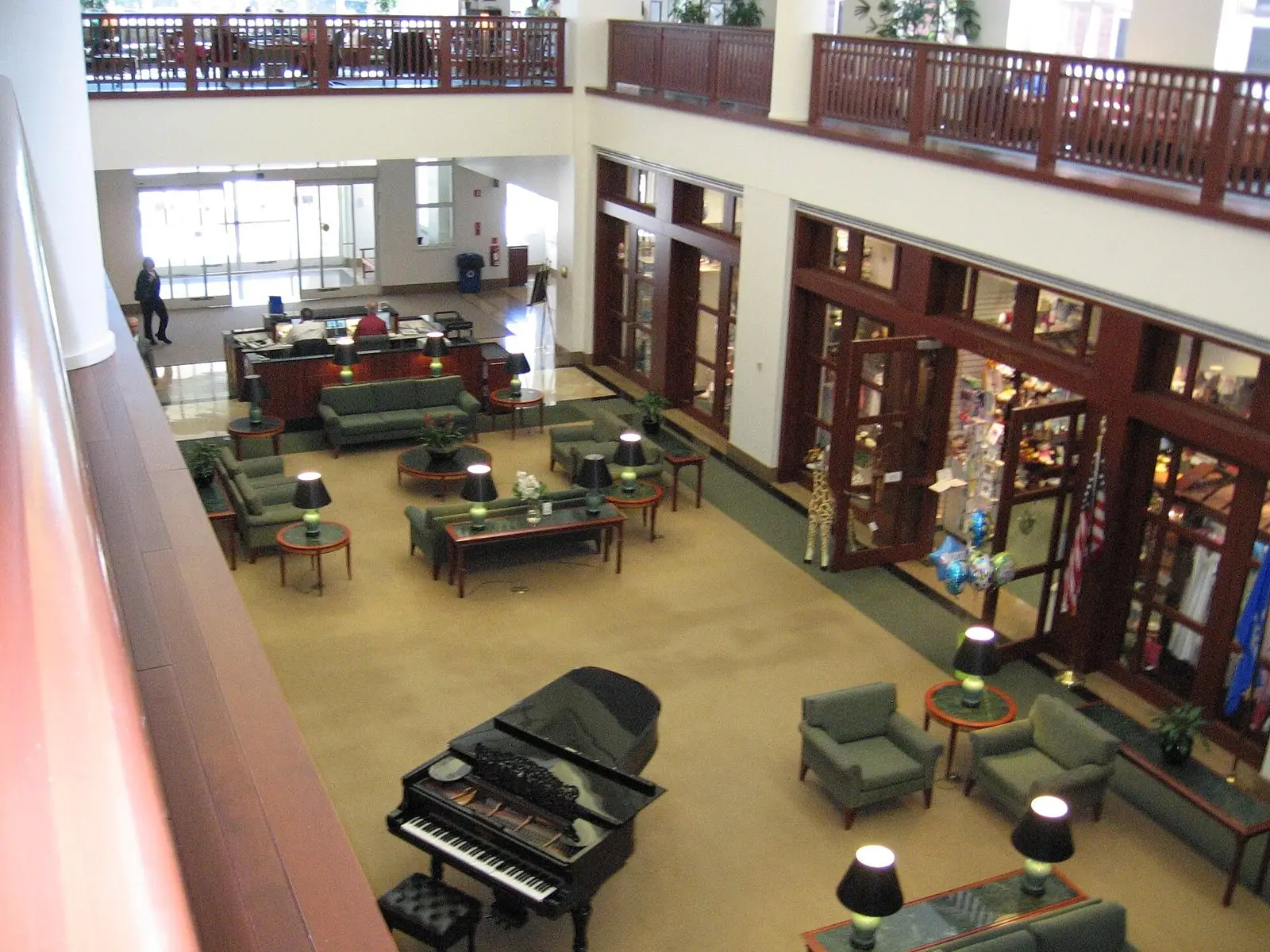
For Anne Newland, music has been a constant from the years of college radio onward, and her instruments are guitar and piano. Medicine has its own long conversation with music, and it often begins in the quietest rooms of a hospital. Picture a cellist settling a chair between the monitors of an intensive care unit, the bow drawn slowly so the sound fills the space without startling anyone. What happens next, to the patient, the family and the staff, is the subject of a growing body of research, and of some sharp disagreement about how much that research can yet prove.
Music at the bedside
The cellist and art therapist Claire Oppert, who has worked in Paris hospitals, plays for patients with all kinds of illness, including people at the end of life, and her book The Schubert Treatment describes that work1. A 2024 review in The New York Times Book Review1 counted at least three new books that year on music as a kind of medicine and called the field an old therapy that has become a busy area of research. The reviewer explained a personal interest: a parent, a retired professional violist and pianist with advancing dementia, could still sight read and play in weekly string quartets.
“Ten minutes of Schubert is the equivalent of five milligrams of oxy”the chief of a Paris palliative care unit, quoted by Claire Oppert, The New York Times
Musicians now turn up in many corners of the hospital. Live music plays in some oncology waiting rooms, greets newborns in some neonatal intensive care units and comforts the dying in hospice, according to a 2021 report in The New York Times2. Raymond Quigley, a pediatric nephrologist in Dallas, told UT Southwestern Medical Center3 that he watched tiny infants respond well when he played his viola in a neonatal unit.
Music therapy as a partner to treatment
Music therapy is a clinical discipline with its own practitioners. The 2021 Times report follows Andrew Rossetti, a licensed music therapist and researcher in New York, who used guitar chords and guided visualization to calm Julia Justo, a graphic artist whose radiation treatment for cancer in 2016 was causing her severe anxiety2. She said she felt more relaxed at once and kept seeing him weekly for help with problems such as sleep. Therapists now target asthma, autism, depression and brain disorders including Parkinson's disease, Alzheimer's disease, epilepsy and stroke. The report is careful on one point: these therapies are rarely used alone, and they work as additions to other medical care that help patients cope with stress.
What music does in the brain
Neurologists explain the effect through the sheer reach of music in the brain. Alexander Pantelyat, a neurologist who directs the Johns Hopkins Center for Music and Medicine, told the Hopkins magazine Dome in 20224 that simply listening to music lights up more brain regions at once than any other human activity. Areas that process speech in the temporal lobe overlap with those that process music, songs tied to strong memories can stir the brain's reward centers, and relaxing music can lower cortisol, the stress hormone, along with heart rate and blood pressure. In musicians, the white matter linking the two halves of the brain is thicker, probably because training uses both sides over and over.
Language and music seem to share circuitry. Sumil Nair, writing on the Johns Hopkins Biomedical Odyssey blog in 20205 as he prepared to start medical school, cited a 2014 Johns Hopkins study of jazz players showing that music activates brain regions tied to syntax and verbal communication. Nair took from it the idea that people are built to be changed by music.
Rhythm and Parkinson's disease
Parkinson's disease has become a proving ground. The Hopkins center, founded in 2015 with a faculty member of the Peabody Institute as cofounder, runs weekly online classes in which patients clap rhythms in call and response, and a 2015 study of 20 patients there found that drumming could improve quality of life and mobility4. In the Guitar PD study, published in June 2022, people with Parkinson's took group guitar lessons twice a week for six weeks; 24 of 26 finished, and they showed significant gains in mood and anxiety, some lasting six to 12 weeks after the lessons ended. A 30 week trial called ParkinSonics found that singing in a weekly chorus raised the quietest voice volumes of participants, which matters because the disease tends to make speech softer and flatter.
| What participants did | What researchers found | |
|---|---|---|
| Drumming study (2015) | 20 patients played drums | Better quality of life and mobility |
| Guitar PD (2022) | Group guitar lessons twice a week for six weeks | Better mood and anxiety; 24 of 26 finished |
| ParkinSonics | Weekly chorus singing for 30 weeks | Louder minimum voice volume |
What the evidence still lacks
The studies are encouraging but small. Guitar PD was a feasibility study, built to test whether such a program can work in practice, and its authors called for larger trials4. Pantelyat argues that the field needs large, well designed clinical trials across several centers to show which interventions work and how. In 2019 the National Institutes of Health funded the Sound Health Network, a partnership of the National Endowment for the Arts and the University of California San Francisco, whose projects range from music after cochlear implants to easing caregiver stress. Pantelyat's hope is that one day sending a patient to a weekly choir or drumming class might do as much as a prescription.
- 1697William Congreve writes that music has charms to soothe a savage breast
- 1969A combo of New York doctors plays its first concert as the jazz doctors
- 2008The World Doctors Orchestra is founded
- 2014A Hopkins study of jazz players links music to language circuits
- 2015Johns Hopkins founds its Center for Music and Medicine
- 2019The NIH funds the Sound Health Network
- 2022The Guitar PD study reports gains in mood and anxiety
Doctors who make music
Physicians have long played on the side. In 1971 The New York Times profiled6 James Goldrich, an obstetrician who on most Monday nights carried his trumpet to the Village Vanguard to sit in with the Thad Jones and Mel Lewis big band, and who belonged to a loose combo known as the jazz doctors, formed at a 1969 concert. He had chosen medicine over music in college but said that keeping both made him happy, as long as neither his patients nor his playing suffered. Today the World Doctors Orchestra, founded in 2008, gathers more than 100 physicians from 60 countries for benefit concerts, and its 2023 Dallas concerts included 86 doctors and musicians3.
Its players describe music and medicine as crafts that train each other. A pediatric emergency physician who plays violin compared learning music to learning a specialty's language and then translating it for patients. Shan Su, a radiology resident and violist, listens to a new piece on repeat the way she makes several passes through an imaging study, and Walter Kutz, a pediatric ear, nose and throat specialist who plays tuba, credits the instrument with teaching him teamwork and concentration.
What music asks of the listener
For many clinicians, music is also where the impulse to care began. Nair wrote of the nights after his grandfather died, when he sat with his mother listening to the old Bollywood songs of her childhood and watched what the music did for her5. Quigley put the demand of ensemble playing simply: the reward, he said, lies in hearing what the players around you are making while you play3. That is what music asks of anyone in its presence, whether a patient in a hospital bed or the doctor at the music stand: full attention to another person's sound, held for as long as the piece lasts. More on the arts in clinical life appears in the medical humanities, graphic medicine and comics in medical education, gathered under comics, music and medicine.
References
- How the Sound of Music Can Be Healing. Literally. (Published 2024). The New York Times, 2024.
- The Healing Power of Music (Published 2021). The New York Times, 2021.
- The healing power of music, World Doctor. UT Southwestern Medical Center, 2023.
- Harnessing the Healing Power of Music | Johns Hopkins Medicine. Johns Hopkins Medicine.
- Music As a Source of Healing: Drawing Inspiration for Medicine | Biomedical Odyssey. Johns Hopkins Medicine, 2020.
- The jazz Doctors' Prescribe Music As Best Therapy (Published 1971). The New York Times, 1971.
Further reading online
- The New York TimesHow the Sound of Music Can Be Healing. Literally. (Published 2024)
- UT Southwestern Medical CenterThe healing power of music, World Doctor
- Johns Hopkins MedicineHarnessing the Healing Power of Music | Johns Hopkins Medicine
Related entries
Graphic Medicine
Comics about illness, caregiving and clinical work, and the artists, nurses and doctors who turned them into a field.
Comics in Medical Education
Why some medical schools hand students pens and paper, and what the resulting comics reveal about training.
Comics and Health Education
From wartime posters to pandemic booklets, how comics teach health and what the trials say about them.

