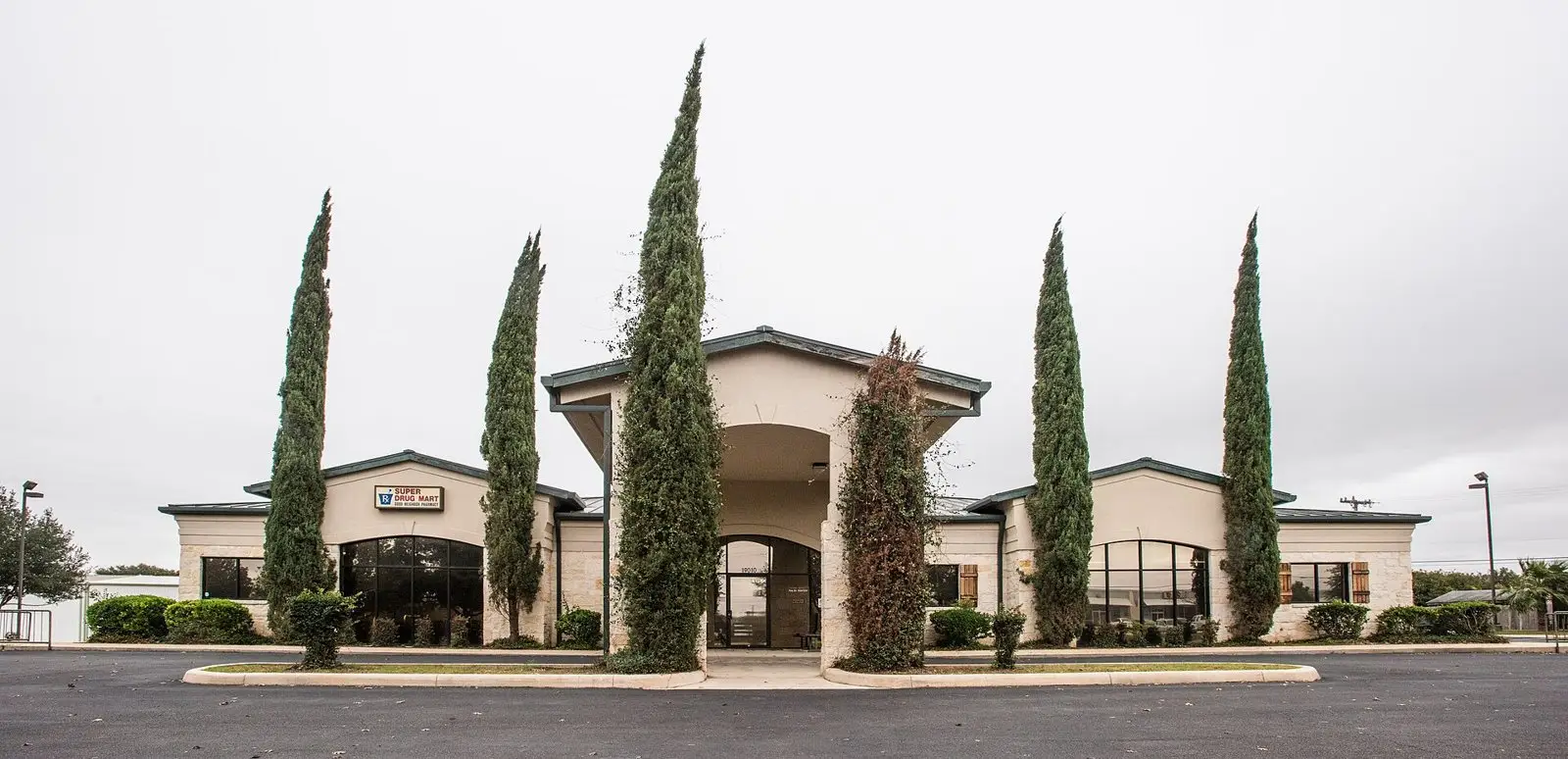
A clinic sign announcing a sliding fee scale, where the charge for a visit falls as a household's income falls, is the familiar front door of community health care, and Anne Newland led a network of such centers across northern Arizona, where hundreds of staff cared for tens of thousands of patients. This entry treats the subject as general education: how community clinics learn what their neighbors need, how rural and tribal systems organize care around relationships, and how medical schools use these clinics as classrooms.
Starting from what a community needs
A clinic that serves a community has to find out what that community wants. An AAMC News report from 20171 describes the community health needs assessment, the process of gathering local data, engaging residents and organizations, choosing priority problems and building programs to address them. An AAMC project funded by the Agency for Healthcare Research and Quality, launched in February 2017, set eight teams from medical schools and teaching hospitals to spend three years building such systems.
The report's warning example is a neighborhood where diabetes was rising and each department responded on its own, with no shared goal and no community voice1.
- 1Collect data Gather information that identifies the community's local health needs.
- 2Engage stakeholders Bring residents and community organizations into the work.
- 3Set priorities Agree on which health problems matter most.
- 4Build initiatives Develop programs aimed at those priority problems.
Why relationships come first
Some safety and quality leaders describe relationships as the core of good care. An IHI interview with its vice president of safety2, a physician trained in aviation medicine with the US Coast Guard, traces his route to the Indian Health Service headquarters, where he led a program that transformed clinics into patient centered medical homes. He later led a preventable harm initiative for a large New Mexico health system.
His lessons are practical: build one on one relationships, use the right frameworks, make an operational plan, and test changes on a small scale with Plan, Do, Study, Act cycles adapted to each unit's culture. Personal connections, he argues, are what hold an organization's shared beliefs together2.
A tribally owned system in Alaska
An IHI blog post from November 20253 describes Southcentral Foundation in Anchorage, an Alaska Native owned nonprofit health system serving nearly 70,000 Alaska Native and American Indian people in the city and surrounding areas. Over two decades it rebuilt its whole system with Alaska Native people at the center of how care is designed and delivered.
The writer, an IHI vice president, attended the system's Core Concepts training, which teaches staff relationship based communication through exercises, storytelling and honest dialogue. The system refers to its patients as customer owners and shares accountability for quality with them3.
Keeping rural clinicians connected
Rural clinics depend on clinicians who stay. A 2013 Portland State University dissertation by Ryan Tyler Palmer4 starts from the shortage of rural physicians in America and names one cause: rural doctors often lack a professional community of peers. It studied the Oregon Rural Scholars Program, whose third year students placed in remote parts of Oregon met online with a faculty member for a shared clinical round using video, screen sharing and joint notes.
Over the sessions the group moved from individual tasks toward collaboration. Students said the round reduced their isolation, strengthened their sense of community and made rural practice more appealing, and the author recommends similar online groups for practicing rural clinicians4.
Health centers as teaching sites
Medical schools now place students inside community health centers. A 2022 Kaiser Permanente report5 describes the first class at the Kaiser Permanente Bernard J. Tyson School of Medicine in Pasadena, which opened in July 2020, completing a two year service learning course at health centers across Southern California. Partners included ParkTree Community Health Center, the JWCH Center for Community Health and St. John's Well Child and Family Center.
Student projects ranged from raising preventive screening rates to art based healing on Skid Row and wider awareness of transgender health programs. The course also taught critical consciousness, the study of the structures that create inequity, and social accountability5.
Service learning in Boston and Columbus
Other schools build community time into every student's training. Tufts University School of Medicine6 has all of its students spend roughly 50 hours working in the community as collaborators, mentors and educators, and its Tisch Summer Fellows program offers paid summer internships in community health centers and local nonprofits.
At Ohio State, the Community Health Education program7 runs for a calendar year. Groups of four to ten students pair with a Columbus organization, begin with a needs assessment, design a project with community leaders, and finish with reflection and a presentation. One group worked with Walk with a Doc, a physician led walking group7.
| Length | Where students work | |
|---|---|---|
| Tufts Community Service Learning | About 50 hours | Community partners in Boston and Maine |
| Ohio State Community Health Education | One calendar year | Columbus community organizations |
| Kaiser Permanente service learning | Two years | Health centers across Southern California |
| Bridging the Gaps | A summer | Community organizations in Pennsylvania and New Jersey |
Lessons from Bridging the Gaps
The oldest of these programs is in Philadelphia. An AAMC News account from November 20268 describes Bridging the Gaps, which for 35 years has sent health professions students to work in community organizations in Pennsylvania and southern New Jersey, and now counts more than 6,400 alumni. A founding faculty member, Donald Schwarz, traces it to some 1,200 home visits he made with a nurse practitioner to adolescent mothers in West and South Philadelphia.
The program's central lesson is that health runs through the community as much as through the clinic8.
Listening before building
The same sources share a caution. Schwarz warns that large institutions too often look at nearby neighborhoods, decide what residents need and deliver it without listening, and that genuine listening can solve problems the institutions thought unsolvable. The filmmaker André Robert Lee hopes students who see these lives will one day ask a late patient how the trip went and what would make it easier next time8.
At Ohio State the course director, Mark Troyer, says the work helps students see people as people in their own communities, outside the clinic7.
“We'd like the community to tell us where they are”Courtney Aklin, National Institute on Minority Health and Health Disparities, Association of American Medical Colleges
Patients as owners of their care
A community clinic whose patients help direct it turns those ideas into structure. The Southcentral Foundation model shows what that can mean in practice: the people served are owners rather than customers, accountability for quality is shared between staff and patients, and leadership is expected at every level of the system3. The AAMC health equity project makes a similar point from the research side, asking communities to define themselves rather than letting institutions do it for them1.
For patients, that arrangement means the clinic answers to the people in its waiting room. The tools such clinics rely on are covered under redesigning primary care, patient safety and improvement collaboratives, and the next entry turns to osteopathic medicine.
References
- Medical Schools, Teaching Hospitals Partner With Community to Move Toward Health Equity. Association of American Medical Colleges, 2018.
- “Relationships Eat Culture for Breakfast” and Other Safety Leadership Lessons. Institute for Healthcare Improvement, 2022.
- Centering Relationships in Healing: How an Alaskan Health System is Transforming Care Through Trust, Culture, and Community. Institute for Healthcare Improvement, 2025.
- Exploring Online Community Among Rural Medical Education Students: A Case Study. Portland State University.
- Community based learning a focus for medical students. The Permanente Medical Group, 2022.
- Community Service Learning. Tufts University.
- Service learning program gives medical students access to community based educational experiences. Ohio State University.
- To become better health care providers, students commit their hearts to community work. Association of American Medical Colleges, 2026.
Further reading online
- Association of American Medical CollegesMedical Schools, Teaching Hospitals Partner With Community to Move Toward Health Equity
- Institute for Healthcare Improvement“Relationships Eat Culture for Breakfast” and Other Safety Leadership Lessons
- Portland State UniversityExploring Online Community Among Rural Medical Education Students: A Case Study
- The Permanente Medical GroupCommunity based learning a focus for medical students
- Tufts UniversityCommunity Service Learning
- Ohio State UniversityService learning program gives medical students access to community based educational experiences
Related entries
Quality Improvement Collaboratives
Why clinics that improve side by side, with shared data and deadlines, tend to move faster than clinics working alone.
Patient Safety
Cockpit habits, a five step checklist and a duty to speak up reshaped how hospitals think about harm.
Redesigning Primary Care Teams
Shorter visits, same day appointments and shared roles: what changes when a clinic redesigns its primary care.

